₹15,000.00
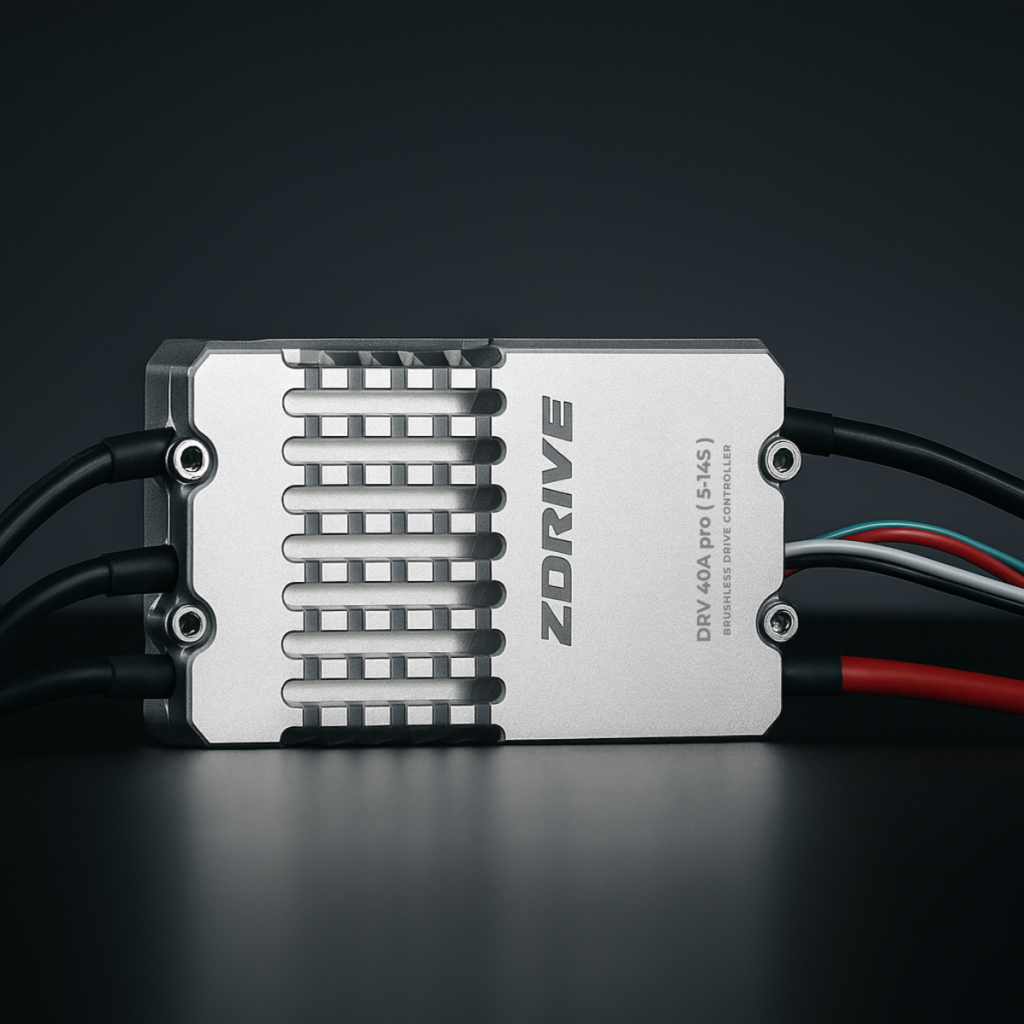
The DRV 180A ESC is designed for UAV platforms requiring extreme power stability, precise control, and long-term durability. Its high-efficiency drive architecture provides smooth motor output, rapid RPM response, and improved flight efficiency under heavy load.
With support for CAN and PWM throttle input, the ESC integrates seamlessly into advanced UAV systems, enabling synchronized propulsion, fault reporting, RPM telemetry, and precise control during vertical takeoff, hovering, or high-power cruise operations. Its complete suite of protection functions, including stall, overload, signal loss, over-temperature, and voltage protection, makes it highly reliable for industrial, mapping, logistics, and VTOL aircraft applications.
The DRV 180A (5–18S) is a high-current electronic speed controller engineered for heavy-lift UAVs, VTOL aircraft, and industrial drone systems. With support for CAN digital control and PWM analogue input, it provides smooth propulsion, rapid response, and robust reliability for high-power missions.
| Input Voltage | 5S – 18S LiPo |
|---|---|
| Continuous Current | 180A |
| Maximum Current | 180A (with cooling) |
| Control Modes | CAN + PWM |
| PWM Signal Voltage | 3.3V / 5V compatible |
| Signal Output | RPM signal, Fault/Error signal |
| Signal Lines | GND (Black), Throttle (White), Fault (Yellow), Speed (Blue) |
| Signal Frequency | 50 – 500 Hz |
| Throttle Pulse Width | 1050 – 1940 µs |
| Voltage Protection | Supported |
| Temperature Protection | Supported |
| Stall Protection | Supported |
| Short Circuit Protection | Supported |
| Throttle Loss Protection | Supported |
| Startup Protection | Supported |
| Firmware Update | Supported (online) |
| BEC | 5V / 200 mA |
| CAN Bus Lines | CANH (Red), CANL (Green) |
| Dimensions | 117.5 × 56.3 × 42.8 mm |
| Operating Temperature | –20°C to 65°C |
| Weight | ~286 g |
| Power Wires | 8 AWG (190 mm) |
| Motor Wires | 12 AWG (170 mm) |
| Signal Cable Length | 420 mm |
| IP Rating | IPX4 |
| Beep Pattern | Issue | Cause | Solution |
| Beep… (every 1s) | Motor won’t start | Throttle signal lost for >0.3s | Check transmitter/receiver; adjust throttle range |
| Fast beep-beep-beepd | Motor won’t start | Throttle not at zero | Move the throttle to minimum |
| Beep-beep (every 1s) | Motor won’t start | Battery < 16V | Replace or recharge battery |
| Beep-beep (every 1s) | Motor won’t start | Battery > 80V | Use correct battery |
| Beep-beep-beep (every 1s) | ESC overheating | Temperature >125°C | Let ESC cool before use |
| Beep-beep-beep-beep (1s) | Overload / abnormal startup | Incorrect propeller or high load | Replace with correct propeller |
The DRV 180A ESC is designed for UAV systems that require extreme current handling, precise control, and stable motor performance. Its synchronous freewheeling architecture enhances throttle linearity, reduces switching losses, and improves efficiency across high RPM ranges.
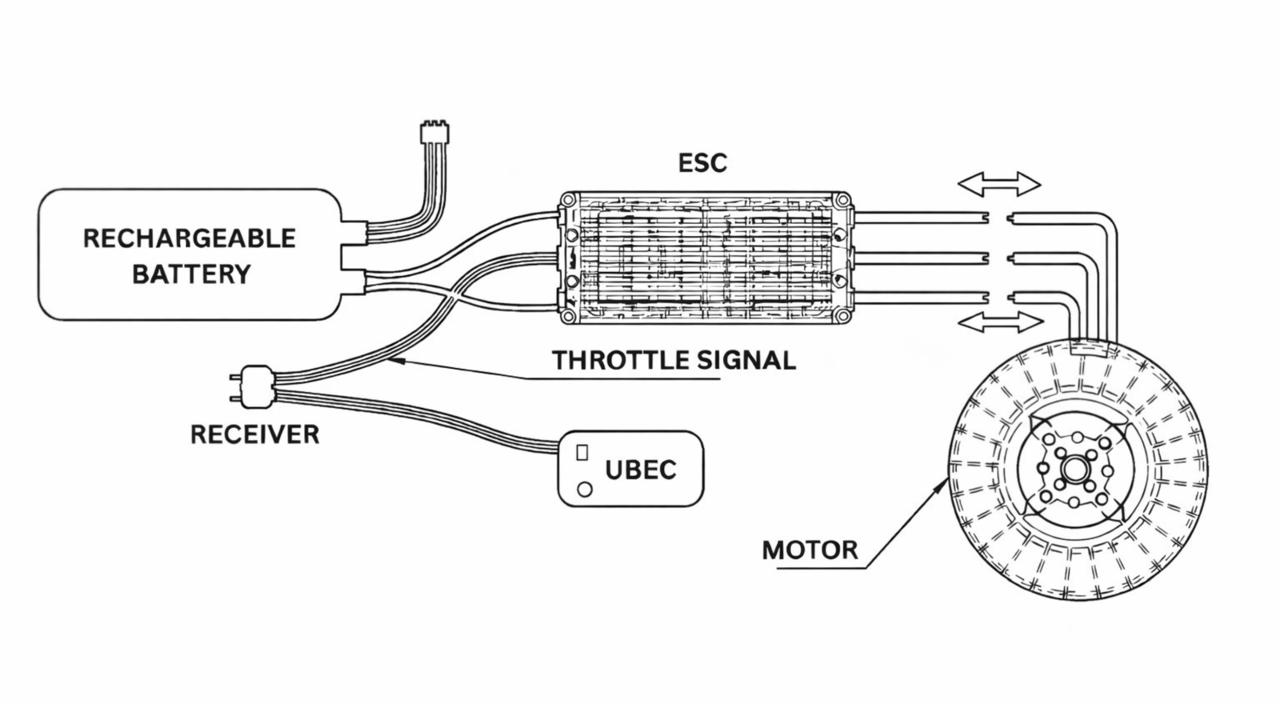
Equipped with dual-mode throttle control, isolated signal architecture, and full CAN bus compatibility, the ESC provides telemetry data, RPM feedback, fault alerts, and accurate throttle interpretation for multi-motor UAV platforms.
Short Circuit Protection: Shuts down the output when a short circuit is detected and restarts automatically after 100 ms.
Stall Protection: If the motor stalls, the ESC stops output until the throttle is reset to zero.
Voltage Protection: Prevents startup below 16V or above 64V (inactive during flight).
Temperature Protection
Throttle Loss Protection: Cuts power if the throttle signal is lost for more than 2 seconds; restores after the signal returns.
Startup Protection: If the motor fails to rotate within 10 seconds, the ESC disables output until the throttle is reset.
M_RPM = E_FRE × 60 / P
It supports 5S to 18S LiPo batteries.
Yes, it supports CAN, PWM, and provides RPM + fault outputs.
Possible reasons include throttle not at zero, low/high voltage, or signal loss.
At 125°C, output is reduced; at 140°C, the ESC shuts down until it cools to 80°C.
Yes, it includes a 5V / 200mA BEC.
Likely due to overload, incorrect propeller selection, or startup protection activation.
Yes, the ESC has full isolation between control signals and main power for enhanced safety.